



A Guide to Stinging Insects, from Beneficials to Wasps & Hornets
When temperatures get above 50° F, stinging insects start to make themselves at home. By mid-spring, wasps, hornets, yellowjackets, bees and other stinging insects may begin building nests and expanding their brood.
That activity becomes a problem when nests appear in the wrong places, such as above doorways, under eaves, inside wall voids or around outdoor equipment, patios and other high-traffic areas.
For customers, stinging insects can create real safety concerns. But not every stinging insect should be treated the same. Some pose a clear risk. Others provide important benefits and should be preserved whenever possible.
For pest control operators, the goal is not broad-spectrum elimination. It is targeted, informed intervention based on species, behavior, nest location and risk.
Why Stinging Insects Can Be Dangerous
Stinging insects can be dangerous. Not only are the stings painful, but they can also trigger allergic reactions that can turn deadly.
Yellowjackets and bald-faced hornets are among the more aggressive stinging insects PMPs may encounter. These insects are territorial and may attack when people, pets or equipment get too close to the nest. Unlike honeybees, many wasps and hornets have smooth stingers, allowing them to sting multiple times.
Yellow jackets can be particularly difficult to deal with, since their nests are often built in hidden cavities or underground. Too many people or pets have unknowingly stumbled across their nests and felt the consequences. Bald-faced hornet nests are more apparent, as their nests are typically built in trees, shrubs or under an eaves or overhang.
Honeybees and bumblebees can also be dangerous to vulnerable individuals if their nests are disturbed. While they are generally less aggressive than yellow jackets or hornets, they can still defend their colony. A large honeybee colony can become a serious hazard if it is threatened, and bumblebees may bump or strike intruders before resorting to stinging.
Not all stinging insects need to be controlled
The presence of stinging insects does not always mean treatment is necessary. In some cases, the right decision may be to monitor activity, leave the nest alone or recommend relocation by a beekeeper or other qualified professional.
Honeybees and bumblebees are important pollinators and should be preserved whenever possible. If they are away from high-traffic areas and do not pose a direct risk to people, pets or customers, control may not be needed. For honeybees, removal and relocation may be the better option, especially when a colony has established itself in or near a structure.
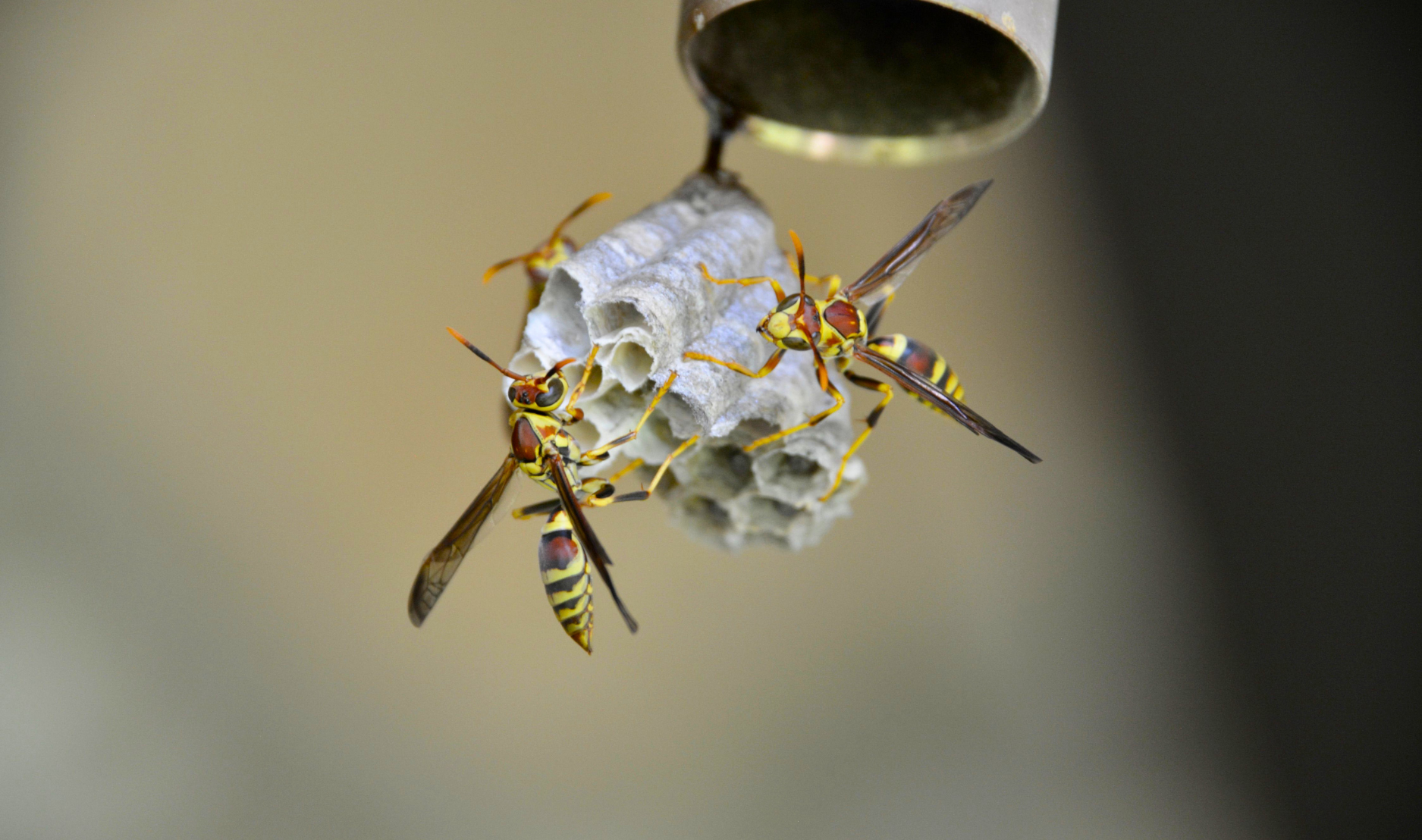
Some wasps are also less threatening than their reputation suggests. Mud daubers are solitary wasps that help control spiders and are typically not aggressive unless handled or disturbed. Paper wasps can also help reduce caterpillars and other insects around landscapes and structures.
However, even beneficial or less aggressive insects can become a problem in the wrong location. A nest near an entryway, playground, outdoor seating area, loading dock or building entrance may require action because of the risk of accidental contact.
When it's time to get involved
For pest control operators, effective stinging insect management starts with targeted, informed intervention. A few wasps flying nearby does not always mean treatment is required. However, several factors should be considered when assessing the risk of a problem.
Location - A nest high in a tree at the edge of a property may not create the same risk as one built above a front door, inside a wall void, under playground equipment or near a restaurant patio.
Aggression - Yellowjackets and bald-faced hornets are more likely to defend nests aggressively, especially later in the season as colonies grow and food sources shift.
Human activity - Schools, healthcare facilities, parks, multifamily housing and outdoor dining areas often have a lower tolerance for stinging insect activity because more people are moving through the area.
Population growth - A small nest in spring may seem harmless, but colonies can expand quickly and become harder to control later in the season.
Choosing the right product for the situation
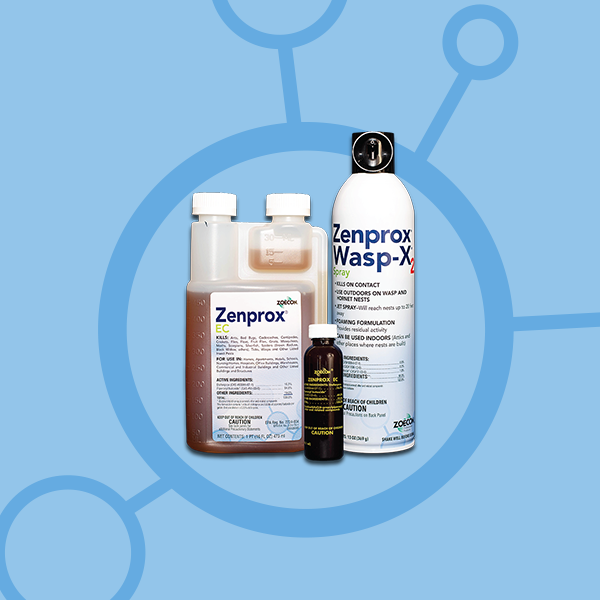
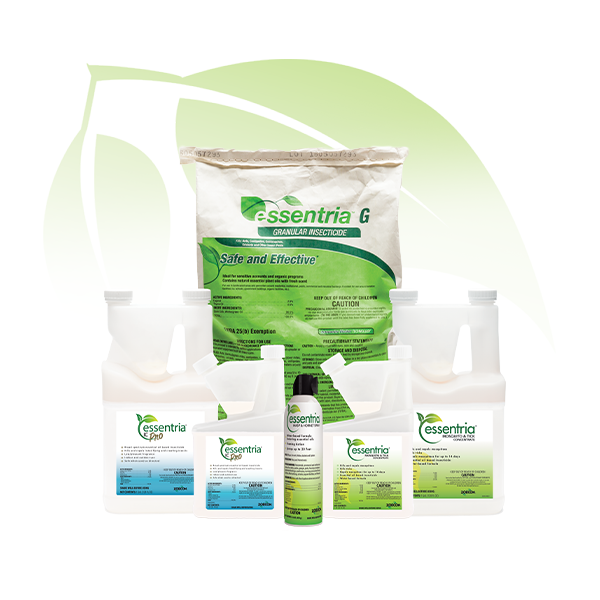
Once control is warranted, PMPs need tools to treat nests effectively and from a distance. Zoecon offers multiple solutions for stinging insect control, including Essentria® Wasp & Hornet Spray and Zenprox® Wasp-X® 2 Spray.
Essentria® Wasp & Hornet Spray is an essential oil formulation, featuring botanically derived active ingredients. This easy-to-use wasp and hornet control solution sprays up to 20 feet with foaming action, to reach difficult areas indoors and out.
Powered by the core active ingredient, etofenprox, Zenprox® Wasp-X®2 Spray provides the immediate knockdown of wasps, hornets and yellow jackets. It is designed for both indoor and outdoor use, featuring a foaming spray that reaches up to 20 feet.
As always, PMPs should read and follow all label directions before application and choose products based on the treatment site, target insect and service expectations.
Responsible stinging insect management does not mean eliminating every bee, wasp or hornet on a property. It means knowing which insects are beneficial, which pose a real risk, and when intervention is necessary.
RELATED ARTICLES