





You Can’t Forget the Fleas, No Matter the Weather!
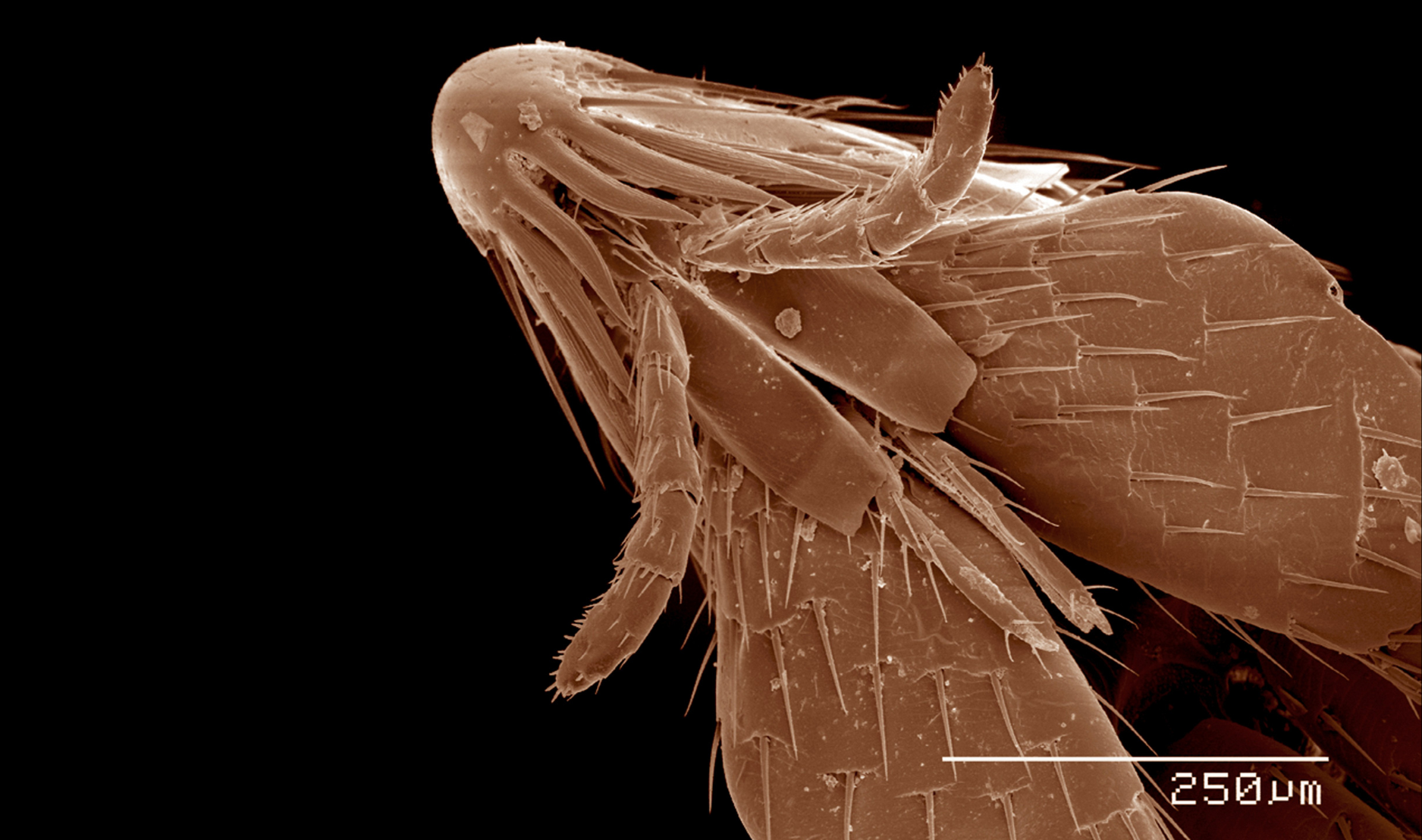
When our team sat down with resident insect control experts, Mel Whitson and Dan Killingsworth, to talk about flea control, we weren't prepared for just HOW MUCH these guys know about fleas.
For instance, do your techs know that there are nearly 2,500 species of fleas worldwide? We only deal with upwards of 300 in the U.S. We even learned that a flea is purported to be one of the first things Galileo looked at under his microscope.
It's fair to say that the flea is deeply woven into the human story, and that's largely due to our relationship with animals, including rodents. Approximately 74% of flea issues are somehow associated with rodents, which is why techs have to stay vigilant about flea control, no matter the temperature.
Why Fight Fleas in Cold Weather?
On the surface, winter seems like a good time to pump the brakes on flea control. After all, flea larvae fail to develop at temperatures below 55 degrees Fahrenheit. But what about those larvae that have already been developing? Here's just a few reasons to keep fleas front of mind:
- Ctenocaphalides felis, a flea species which is commonly found to impact pets, is encased by a cocoon in the pupa stage. Just think about how warm and inviting homes and businesses are year-round in our modern world, not to mention the mild winters many parts of the country experience. Those pupae can survive in peace in carpet fibers, bedding and furniture until they find a host.
- The rise of homesteading in recent years is bringing more domesticated farm animals like poultry into urban settings and into direct contact with humans and pets. Backyard chickens are an ideal host for sticktight fleas, or Echidnophaga gallinacea, that can even attach to humans, burrowing into skin.
- Since so many flea problems can be traced back to rodents, fleas can enjoy a protected microhabitat like a nest or burrow until that rodent infiltrates a home or business. So now, that customer has a rodent problem AND a flea problem.
Replace Callbacks with Revenue: You Get What You Pay For!
In addition to being incredibly knowledgeable about fleas, Mel and Dan are experts on how to control them, and there just isn't a better product line out there than what Zoëcon® Professional Products offers.
"Gentrol® and Precor® are perpetually ahead of their time," says Dan, and Mel agrees: "The market has been playing catch up for years, but we essentially invented the concept of biorational control."*
And while Gentrol® products can also be used effectively for flea control, the Precor® family of products offers a variety of professional flea solutions that deliver up to 7 months of protection from flea emergence. Powered by the insect growth regulator (IGR), (S)-methoprene, Precor® products control 95% of adult and pre-adult fleas:
- Precor® 2625 Premise Spray: Featuring (S)-methoprene, etofenprox, tetramethrin, pyrethrins and piperonyl butoxide, Precor® 2625 Premise Spray is an ideal solution for residual flea control.
- Precor® 2000 Plus Premise Spray: This proven flea IGR provides pest management professionals with a solution they can count on, for up to seven months of flea control.
- Precor® IGR Concentrate: This formulation helps prevent flea infestations while providing residual flea control on pre-adult fleas (95% of flea populations).
- Precor® Plus Fogger: Designed for indoor use, Precor® Plus Fogger treats large spaces and is well-suited for professional flea control in hard-to-treat areas.
- Petcor® 2 Flea & Tick Spray: Used for on-animal flea control, Petcor® 2 Flea Spray can be used as a dog and cat flea spray to stop flea eggs from hatching for up to 63 days.
- Precor® Outdoor F-T-M: This micro-encapsulated formulation combines the adulticidal power of tau-fluvalinate with the long-lasting control of (S)-methoprene to target fleas, ticks, mosquitoes, and a broad spectrum of labeled pests outdoors, with application approval in turf and ornamental settings.
At the end of the day, a successful flea control program includes a multipronged approach where professionals just like you use a combination of IGRs and adulticides.
"We've got the application rates, we tell you the ounce per gallon. We're as easy as you can get," says Mel. "But you've got to have the right tool for the job. You don't use a hammer for driving screws."
Take Mel's advice and check out our Solution Finder here to determine what's best for your program plan, or connect with a representative in your region for guidance.
You can also make sure your team knows all the important details about how to identify and treat fleas by downloading our poster here.
And don't forget to follow us on social, so you never miss an update!
Facebook - Zoëcon Professional Products
X - @zoeconcentralls
LinkedIn - Zoëcon Professional Products
*Historically, Carl Djerassi (Djerassi et al. 1974) used the term "biorationals" for the first time for pheromones, insect hormones, and hormone antagonists. Read more about how Zoëcon was founded by Dr. Carl Djerassi here.
RELATED ARTICLES